
Quick answer: A litter box should be at least 1.5 times your cat’s length, measured from the tip of the nose to the base of the tail. A 14 inch cat needs a box at least 21 inches long. Feline vet guidelines also give a practical minimum of about 22 x 17 inches. Most boxes sold in stores are smaller than that.
Litter Box Size Calculator
Measure your cat from the tip of the nose to the base of the tail, then enter it here.
How to Measure Your Cat
- Wait until your cat is standing or stretched out, not curled up. Right after a nap or during a meal works well.
- Use a soft tape measure. Start at the tip of the nose and run it along the back to the point where the tail starts. Do not include the tail.
- Round up to the next half inch. A box that is a little too big is never a problem; a box that is too small is.
- Cat will not hold still? Lay the tape on the floor next to your cat and take a photo from above, then read the length from the photo.
Litter Box Size Chart
| Cat length (nose to tail base) | Minimum box length | Example boxes |
|---|---|---|
| 10 in (kitten) | 15 in | Any standard box with a low entry |
| 12 in | 18 in | Arm & Hammer Sifting Pan, IRIS USA Large Top Entry |
| 14 in | 21 in | Modkat XL, KittyGoHere Senior |
| 16 in | 24 in | KittyGoHere Senior, Smart Paws Extra Large |
| 18 in | 27 in | Richell Paw Trax XL, KittyGoHere Jumbo, IRIS USA XX Large |
| 20 in | 30 in | IRIS USA XX Large Open Top |
| Over 20 in | Over 30 in | A large storage tote |
The rule comes from the AAHA and AAFP feline guidelines, which also note that most manufactured boxes are not big enough and that large storage containers often are. The AAFP and ISFM house soiling guidelines set the practical minimum of about 22 x 17 inches.
Common Litter Box Sizes Compared
Here is how the boxes we cover measure up, from smallest to largest. “Fits cats up to” is the box length divided by 1.5.
| Litter box | Length | Fits cats up to | Review |
|---|---|---|---|
| Arm & Hammer Sifting Pan | 19 in | About 12.5 in | See review |
| IRIS USA Large Top Entry | 20.75 in | About 13.5 in | See review |
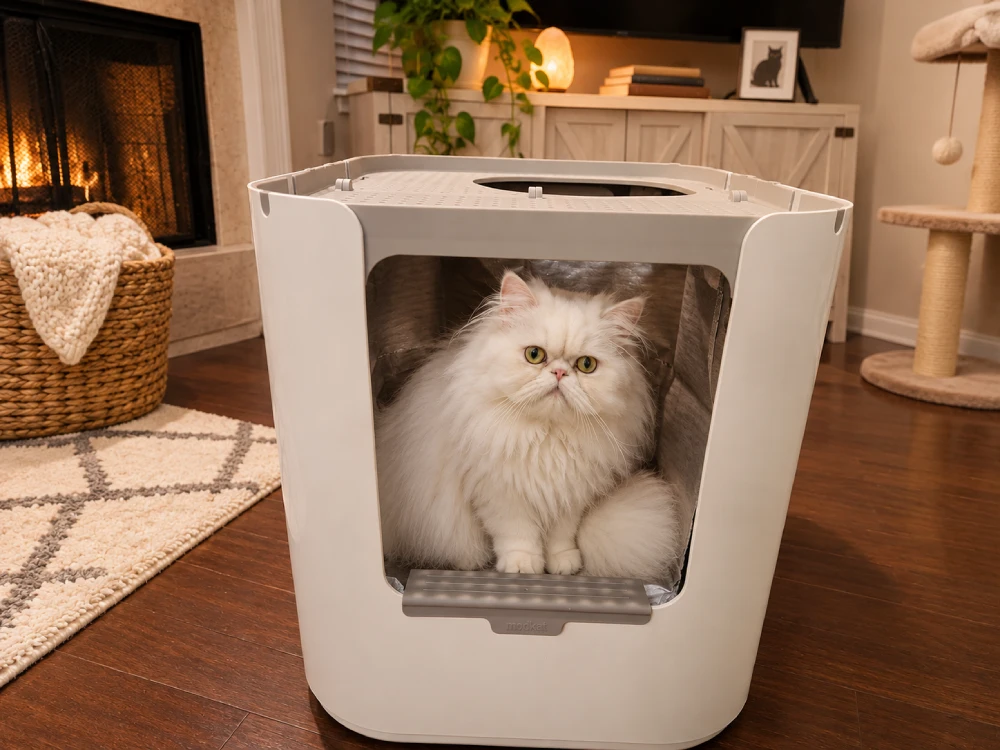
| Modkat XL | 21 in | About 14 in | See review |
| KittyGoHere Senior | 24 in | About 16 in | See review |
| Smart Paws Extra Large | 25.2 in | About 16.5 in | See review |
| Petmate Giant Litter Pan | 25.6 in | About 17 in | See review |
| Richell Paw Trax XL | 27 in | About 18 in | See review |
| KittyGoHere Jumbo | 28 in | About 18.5 in | See review |
| IRIS USA XX Large Open Top | 30 in | About 20 in | See review |
Width and Height Matter Too
- Width: your cat needs room to turn around without touching the walls. Aim for at least 17 inches, the minimum width in the vet guidelines.
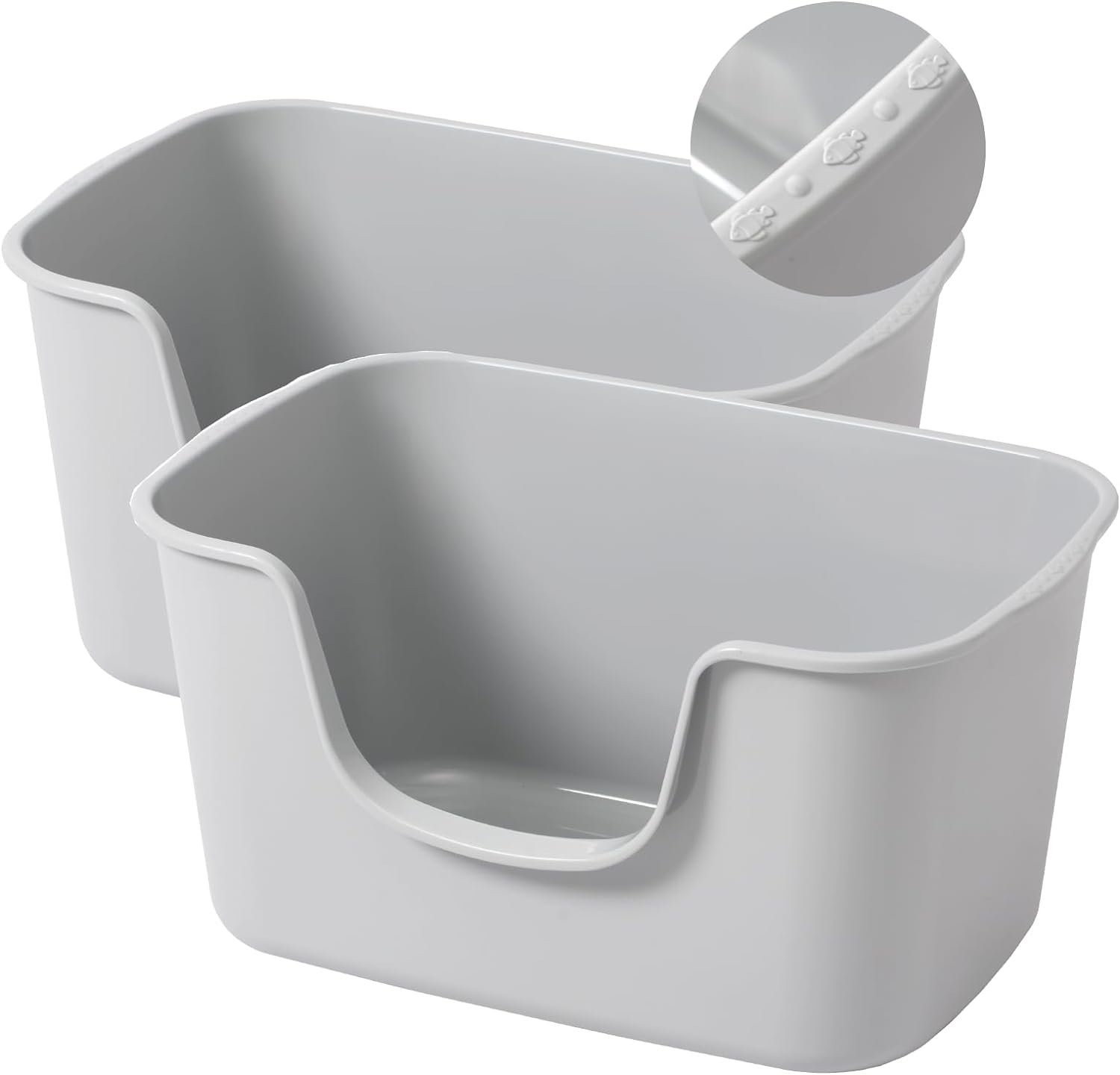
- Wall height: cats that pee standing up or dig hard need walls of 12 inches or more on the back and sides.
- Entry height: older cats and kittens need a low entry. A 3 inch entry is easy for stiff joints; a high entry or a top opening is not.
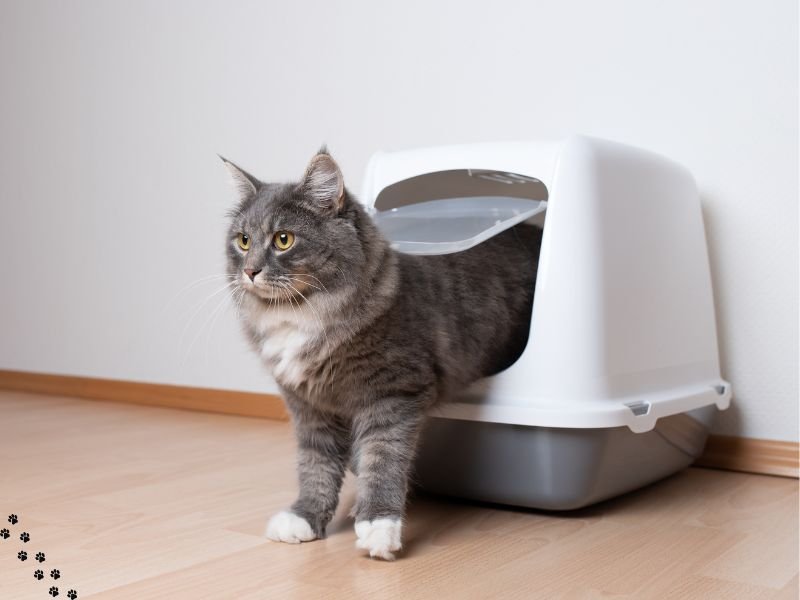
- Covered boxes: a hood does not change the rule. The inside of a covered box still needs to meet the size above, and the door must be wide enough for your cat.
The Right Size for Every Life Stage
| Cat | What to look for |
|---|---|
| Kittens | A low entry so they can climb in. Buy for adult size if you can, because kittens grow fast. |
| Adult cats | 1.5 times body length, with walls tall enough for how your cat digs and pees. |
| Senior cats | The same length, with a low 3 inch entry and no lid to squeeze under. |
| Large breeds | Often over 18 inches long. Look at 27 to 30 inch boxes or a storage tote. |
| Multiple cats | One box per cat plus one extra, each sized for your biggest cat. |
The Cornell Feline Health Center recommends one box per cat, plus one, so each cat always has a free box.
Signs Your Litter Box Is Too Small
- Your cat perches on the edge instead of standing in the litter
- Urine or stool lands just over the edge of the box
- Your cat stops digging or burying
- Your cat goes on the floor right next to the box
- You find litter scattered far from the box after every visit
These can also be signs of a medical problem or a dirty box, so book a vet visit if they start suddenly. If your cat is healthy and the box is clean, try a bigger box first.
How to Make a Big Litter Box From a Storage Tote
When no store box is long enough, a plastic storage tote is the cheapest fix and is the option the AAHA guidelines point to for big cats.
- Buy a tote at least 1.5 times your cat’s length on the inside. Clear or light colors let you see when to scoop.
- Mark the entry on one short side, about 8 inches wide. Keep the bottom of the opening a few inches above the litter line so litter stays in; go lower for older cats.
- Cut the opening with a sharp utility knife or a small saw, working slowly.
- Smooth the edges with sandpaper or cover them with tape so nothing scratches your cat.
- Leave the lid off unless your cat already uses covered boxes. Add litter and put the tote where the old box was.
Frequently Asked Questions
How big should a litter box be?
At least 1.5 times your cat’s length from the nose to the base of the tail. A 14 inch cat needs 21 inches; an 18 inch cat needs 27 inches. Vet guidelines give a practical minimum of about 22 x 17 inches.
Is a bigger litter box always better?
Almost always. Cats like room to dig, turn and step away from waste. The only limit is the entry: a big box with tall sides can be hard for kittens and senior cats to get into.
What size litter box does a kitten need?
A low entry matters more than size at first. Since kittens grow fast, buy a box sized for an adult cat with a low entry, and add a step if your kitten struggles.
What size litter box does a Maine Coon need?
Measure your cat and multiply by 1.5. Many Maine Coons need a box longer than most store boxes, so check our large cat picks or use a storage tote.
Does a covered litter box need to be bigger?
The inside must meet the same 1.5 times rule. Hoods often make the usable space smaller than the outside size suggests, so check the inside measurements.
How many litter boxes do I need?
One per cat, plus one extra, placed in different spots around your home. Each one should be big enough for your largest cat.
Ready to shop? See our 6 best cat litter boxes, our best litter boxes for large cats and our Modkat XL review.